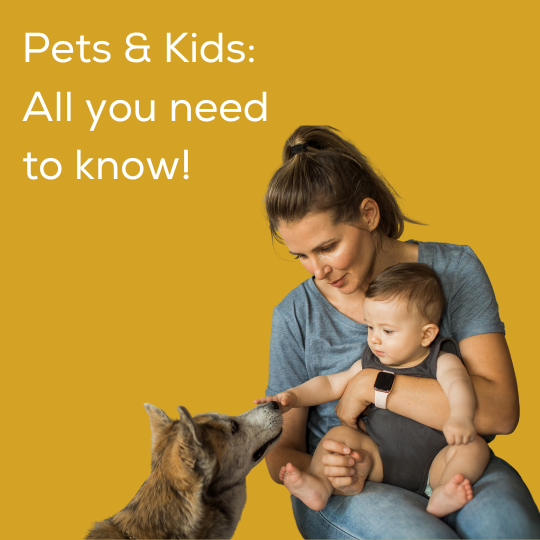
Yes, you can have pets and a baby, and for many families it is one of the best things that happens to a child. It does take planning, patient introductions and close supervision. Pets and children can help each other grow, and there are a few areas where you need to be careful. This guide covers the good, the cautions, and a step-by-step plan for bringing a baby home to a pet. For more on getting started, see our new pet parent hub.
The good things about growing up with a pet
-
Empathy. Kids learn how to care for another living being, show affection and build a long-lasting relationship with a fur friend.
-
Responsibility and confidence. Children understand the importance of looking after someone else. Taking on small chores for the pet, such as helping with walks or tidying toys, builds both responsibility and confidence.
-
Comfort. Animals are tuned in to the moods of the people around them, and many children find a pet a warm, calming presence.
-
Social skills. Children learn to share, take turns and be gentle, often more naturally with a pet than from a lecture.
-
A loyal companion. Your child will always have a friend by their side, day and night.
If you would like to see how animals shape childhood in other ways, read how horses contribute to well-rounded child development.
Things to watch out for
-
Introductions matter. Your pet can get jealous of a new baby and all the attention the baby gets. Introduce the baby slowly, with lots of positive reinforcement for your pet, like praise, pats and rewards.
-
Children need to learn how to behave around pets. Pets can become snappy if children do not know how to treat them. Pulling ears and whiskers, stepping on tails and tight hugs are common conflict points. Teach your child gentle touch, and do not leave them alone together until both are comfortable.
-
Share the attention. Equal attention and care help reduce jealousy and conflict, so both child and pet feel loved.
-
Choose the right pet for your child. Children and pets both have unique personalities, so make sure they are a good pair.
How to prepare your pet before the baby arrives
-
Update your pet's routine early. If walks, play time or sleeping spots will change, start the changes weeks ahead, so your pet does not link them with the baby.
-
Brush up on manners. Cues like "sit", "wait", "leave it" and "settle" make life much easier. See how to communicate better with your dog for how to build them.
-
Set up the baby's spaces. Let your pet sniff the cot, pram and baby items before the baby comes home, with calm, positive praise.
-
Create a retreat for your pet. A bed or crate in a quiet corner gives your pet somewhere to go when things get busy.
-
Practise baby sounds. Play recordings of baby noises at low volume, and raise them slowly.
Bringing the baby home
-
Greet your pet first, calmly. After being away, let someone else hold the baby while you say hello.
-
Let your pet sniff from a distance. Keep the baby in someone's arms, and keep your pet on a leash or calm beside you.
-
Reward calm behaviour. Praise your pet whenever they stay relaxed near the baby.
-
Keep daily routines steady. Walks, play and cuddle time should not disappear.
-
Supervise all contact. Never leave a baby alone with a pet, however gentle your pet is.
Teaching toddlers and young children
- Show "gentle hands" by stroking softly together.
- Teach them to leave a pet alone when it is eating, sleeping or in its retreat space.
- Explain that pets cannot say "stop" in words, so a pet that walks away should be left alone.
- Always supervise play, and step in early if either side looks tense.
Choosing a pet for a family with children
Look closely at breed needs and energy levels before bringing a pet home. A young puppy can be jumpy and mouthy, and it needs training and patience. It is often a good idea to consider a senior pet, as they tend to be more relaxed and less jumpy. Cats and dogs both suit families, as long as the match is thoughtful. If you already have more than one pet at home, read paws vs claws for tips on harmony. Many families also enjoy the joy a pet adds, which you can read about in pawsitively happy.
Everyday safety in an Indian home
- Keep pet toys and baby toys separate.
- Use baby gates in apartments to create pet-free and baby-free zones.
- Keep balcony doors secure and netted.
- Give your pet a place to sleep away from the baby's room, if that helps everyone rest.
- Keep an ID tag on your pet, especially when visitors come and doors open often.
If you have questions about your pet's wellbeing, speak to your veterinarian. For more on everyday good habits, see responsible pet parenting, and for early habits, read the critical socialisation period in puppies and kittens.
Frequently asked questions
Can I keep my dog or cat when I have a baby?
Yes. Many families do. Plan ahead, introduce the baby slowly and always supervise.
Will my pet be jealous of the baby?
It can happen. Keep routines steady, give your pet regular attention and reward calm behaviour around the baby.
When can children play with pets alone?
Not until the child knows how to be gentle and both are comfortable together. Babies and toddlers should never be left alone with a pet.
Which pet is best for a family with kids?
It depends on the pet's personality and your child. Many families find a calmer, older pet easier than a very young puppy.
What should I do if my pet snaps?
Separate them calmly, give your pet space and seek help from a trainer. Do not punish. If you think something else is going on, speak to your veterinarian.
By Team Stepevoli.